
The Signal Arrived Quietly
In 2025, India did allowing.
Allowing machines to think faster.
Allowing cities to grow taller.
Allowing promises to become louder.
Yet, in many places, life continued at walking speed.
In Kalyanpur, a small town that trains barely stopped at, electricity arrived in short bursts. When it did, Leela switched on the ceiling fan in her classroom and smiled as if the day itself had cooperated. She taught science to children who memorized definitions without ever touching a microscope. At night, she recorded lessons on her phone. Not because anyone asked her to, but because absence felt heavier than effort.
Two hundred kilometers away, in Haritola, the earth had forgotten how to hold water. Somashekar, a farmer with hands shaped by decades of waiting, measured seasons by debt rather than rainfall. Meetings came and went. Announcements were made. Nothing arrived. One evening, instead of filing another complaint, he dug a pit behind his house. Not deep. Just enough to believe something could stay.
In Neelapur, the sea had changed its behavior. Storms came earlier. Waves reached further. Zainab, a volunteer, documented broken houses and missing boats. She posted carefully framed videos that never went far enough. Likes did not rebuild walls. Still, she kept recording. Proof mattered, even if response did not.
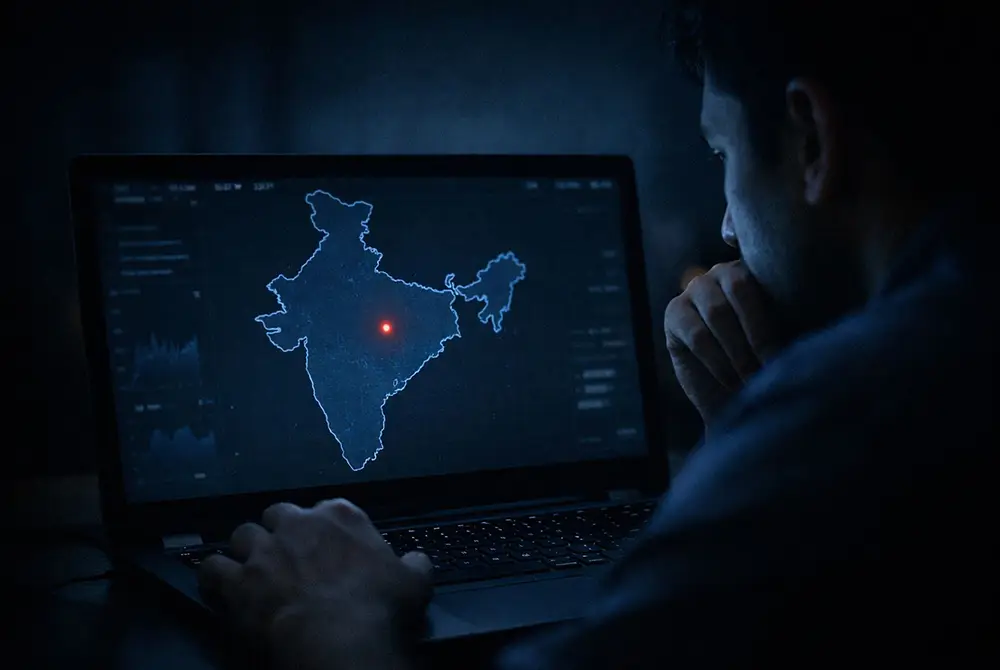
Meanwhile, in Aarnik City, a place where ideas moved faster than people, Rohit worked on a system designed to predict needs before humans expressed them. The dashboard glowed with numbers. Migration probabilities. Resource strain. Engagement ratios. One afternoon, a red dot blinked over Haritola. The recommendation was simple. Ignore. Low priority. Too small. Rohit paused. He manually added a note. Just one line. Potential intervention.
That line traveled.
No announcement followed. No headline appeared.
A junior officer approved a pilot fund after watching Leela’s recorded lesson while waiting for his train.
A local engineer visited Haritola and suggested linking Somashekar’s pit to a larger catchment.
A delayed clearance in Neelapur moved forward after Zainab’s footage appeared in a meeting presentation without attribution.
Nothing extraordinary happened.
And yet, something shifted.
Water stayed longer in Haritola.
A fan ran through a full class period in Kalyanpur.
A foundation was laid again in Neelapur.
Rohit resigned quietly and joined a public systems lab.
There was no celebration.
Progress did not arrive as a wave.
It arrived as alignment.
In a year filled with predictions, dashboards, and declarations, change moved through India without raising its voice. It moved because people acted where systems hesitated. Because someone chose responsibility over recognition.
The signal arrived quietly.
And for once, the country listened.